Summary of the GO Wipes 2025 Conference

On November 12-13, the GO Wipes conference took place in Vienna, gathering experts from across the entire wipes value chain – from raw materials and nonwovens to manufacturing and retail brands. Ecowipes was pleased to once again take part in this event and actively contribute to discussions shaping the future of the industry, particularly in the context of sustainable development.

Our contribution: A presentation by Ecowipes and Jeronimo Martins Poland

Our presentation, titled “Next Generation Wipes in Circular Economy Reality Challenged by Customer’s Expectations,” was delivered by Anna Zawisza, Senior Product Manager at Ecowipes, and Sylwia Kosewska, Quality Development and Private Brand Control at Biedronka (Jeronimo Martins Group).

During the session, we shared the joint vision of Ecowipes and our client, Jeronimo Martins Poland (JMP). We demonstrated how our biodegradable wipes, enhanced with fibers from recycled materials – based on Tricell and Relife nonwovens – fit within the realities of a circular economy while meeting the high expectations of end consumers.

We also discussed the origin and evolution of wet wipes – from their early versions, dominated by PET and viscose fibers, to the breakthrough moment when more manufacturers began using cellulose pulp and biodegradable nonwovens. Thanks to our products, made with nonwovens containing recycled fibers, the concept of a circular economy moves from theory into tangible action.

We highlighted that the revolution we carried out together with Biedronka on household wipes shelves represents a real contribution to plastic reduction: from 2021 to September 2025, we reduced plastic emissions by over 5,000 tons by replacing PET fibers with biodegradable nonwovens made from recycled materials.

Our actions align with one of JMP’s key pillars – “Respect for the Environment” – demonstrating that B2B collaboration and a shared ESG strategy can deliver measurable results.

Challenges and Perspectives

During the presentation, we emphasized the importance of a global transition to biodegradable nonwovens. Only then can the impact on the environment be truly significant. We also highlighted the key role of strong B2B partnerships: it is through joint engagement, like our collaboration with JMP, that real change in the wipes market becomes possible.

Increasing regulatory pressure and growing consumer expectations for transparency and sustainability make the dialogue between manufacturers, retailers, and consumers more important than ever.

Conclusions

  • GO Wipes 2025 confirmed that sustainability is not just a trend, but a necessity — the wipes industry must move toward a genuine circular economy.
  • Through innovative nonwovens and our partnership with JMP, Ecowipes demonstrates that change is possible and delivers measurable results.
  • Education, transparency, and B2B collaboration are essential for a lasting transformation of the sector.

We are delighted to have been part of the discussions in Vienna. Participating in the annual GO Wipes conference continually inspires us to pursue innovation and implement solutions that truly shape the future of the industry.

World Quality Day at Ecowipes [INTERVIEW]

At Ecowipes, we believe that quality is more than just procedures and standards — it’s a philosophy that permeates every aspect of our work. On the occasion of World Quality Day, we invite you to read an inspiring interview with Łukasz Pyzioł, Quality Director at Ecowipes, who shares how we maintain the highest standards and continually raise the bar in our daily operations.

Łukasz Pyzioł: I start with coffee! I’m addicted to it and can’t imagine a morning without it — no matter where I am. Once it’s on my desk, I greet the team on Teams with a quick “Good morning!”, which often turns into a short exchange of key updates. Before I finish my coffee, I review our Quality Dashboard, which aggregates data on nonconformities and complaints, and then I check emails, my calendar, and planner to prepare for meetings.

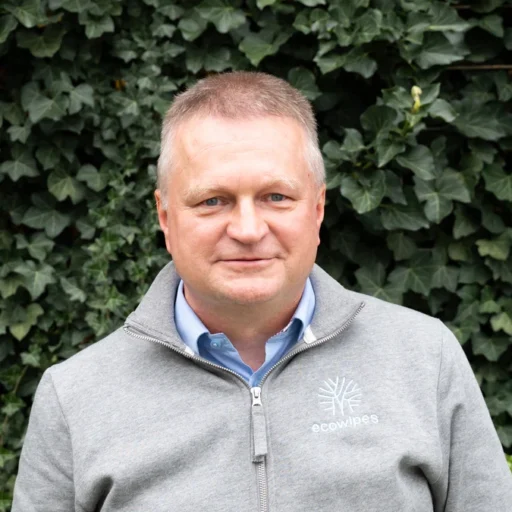
Portrait of the Quality Director at Ecowipes.

ŁP: Every day is an adventure! It may be hard to believe, but there’s no such thing as boredom in quality. Luckily, I’m surrounded by a very competent team. Quality Control, Quality Assurance, Complaints – these are experienced and dedicated people who know the organization inside out, understand its strengths and weaknesses, and can keep a cool head in any situation.

ŁP: I really enjoy the part of my job that feels like solving puzzles. When a nonconformity or complaint arises, we need to find its root cause. It’s a team effort – and the joint process of getting to the bottom of it is fascinating. We bring together a group of engaged people, exchange knowledge and experience, and search for answers. The satisfaction comes when we find a solution. This year, we implemented a process that helps us work more effectively – and we’re constantly improving it. Now, terms like “nonconformity” or “8D Report” no longer scare anyone! That’s thanks to our people’s engagement.

Challenges are best faced together, which is why collaboration with other departments, especially those closest to the “problem,” is key.

ŁP: Quality may sound simple, but in practice it’s a complex and multi-layered concept. In short, it’s the ability to meet user needs safely and in compliance with regulations. But we can expand this definition – for example, if we were building a spacecraft to Mars, we’d add “reliability,” because safety and reliability go hand in hand.

Remember, quality is not just about the product – it’s also about the consistency and efficiency of processes: their productivity, waste levels, and so on.

IT process quality is becoming increasingly important too – from data security to system and application optimization. And let’s not forget the quality of marketing communication – clear, correct, and well-thought-out.

Let’s care about quality at every level – because it’s what builds trust and competitive advantage.

ŁP: It’s a complex topic. The R&D team has tremendous creative power – they look for new solutions and create prototypes. Production, on the other hand, is about standardization, pace, technology, and scale. Quality focuses on compliance and adherence to standards. In practice, we have three key players who must speak the same language, know their roles, and adapt to changes at the same pace.

That’s why it’s so important not to build silos but to integrate people and foster a culture of quality.

A good example of this collaboration is the training on nonconformities we prepared at the beginning of my time at Ecowipes – to ensure we all understand and use the same definitions.

ŁP: That’s an easy one! Above all – analytical thinking and the ability to connect the dots. Whether someone works in Quality Assurance, Incoming Inspection, Microbiology, Physical Chemistry, or Complaints – attention to detail, accuracy, and logical thinking are key.

As I mentioned, “quality” is a very broad concept – the scope of work can vary greatly. One person might be an expert in operating an HPLC (high-performance liquid chromatography, used to analyze the quantity of preservatives, among other things), while another might specialize in legal or audit requirements. The common denominator is one thing: high quality of work.

ŁP: The approach to quality has changed dramatically over the past decade, mainly thanks to the development of data collection and analysis technologies. Not long ago, companies focused on end-product inspection and defect detection, analyzing results with simple statistical methods.

Today, quality control is active at every stage of the product life cycle – from design to production – to work preventively.

Thanks to IT technologies, modern quality management can monitor processes in real time, working hand in hand with production on rapid response, risk management, and parameter adjustments.

Moreover, quality management now extends beyond laboratories. Modern companies implement integrated quality management systems that encompass informational, financial, and logistical processes – as well as non-financial ones, such as social and ethical areas aligned with ESG requirements. This means that a company’s impact on employee well-being and supply chain ethics is also assessed.

ŁP: We’re currently preparing our quality strategy for the next two years. Without revealing too many details, I can say one thing: less control, more prevention.

We’re planning further digitalization and automation, integration of production data, and initiatives focused on better understanding the market.

We also plan to integrate quality processes with our factory in France.

There’s a lot ahead – we definitely won’t get bored!

ŁP: The main reasons for implementing certifications in social and non-financial areas are to ensure appropriate standards of work, safety, and ethics, as well as to meet stakeholder expectations in terms of corporate social responsibility.

Certifications help formalize actions to improve working conditions, protect the environment, and promote sustainable development. They enhance market credibility, increase customer and investor trust, and help companies meet growing regulatory and social demands.

In practice, certification supports better management quality, sustainable development policies, and positively influences the broader social environment.

ŁP: Certifications build credibility and trust. They are proof of compliance with globally recognized standards that minimize errors, control processes, and secure supply chains. Thanks to them, our clients know they are working with a company that has low risk and high reliability – and that the products they buy from us are competitive on the market.

Certification also drives continuous organizational improvement – increasing efficiency, workplace safety, and reducing environmental impact. It’s a key tool in building trust and in gaining and maintaining major clients. That’s why we place such great importance on it.

We’ve built an engaged and effective Quality Assurance team that continuously supports improvement processes and the implementation of certification requirements.

ŁP: It’s an incredibly engaging, diverse, and fascinating role. I have a real impact on the quality of the final product – the one I later see on store shelves. It’s a great feeling to realize how many people use our products. And although quality might seem predictable and repetitive – I assure you, in this field, there’s no instruction manual.

ŁP: Teamwork.

ŁP: I won’t answer in three words! Clients and quality professionals use different languages to describe it. A client sees it through their experience – in our case, that means the aesthetics and functionality of the product. A quality expert focuses on compliance and precision.

So I’ll put it this way: “Quality is the sum of fulfilled requirements that ensure promises are kept – and ultimately lead to success.”

Future Private Labels – the future of private brands in cosmetics

On October 23, 2025, as part of the 7th Private Label Trade Fair, a debate titled Future Private Labels: What Builds Private Brands in the Drugstore and Cosmetics Categories? took place, during which industry experts discussed trends, challenges, and the directions of development for private labels.

Among the panelists was Marta Jabłońska-Kubow, Marketing Department Manager at Ecowipes, who emphasized the importance of sustainable development and the ability to quickly adapt to regulatory changes. “The sustainability trend is no longer a fashion, but a necessity – private brands, thanks to their flexibility, can implement changes almost immediately,” she noted.

Read more about the event and experts’ insights in the full article: targikielce.pl/o-firmie/aktualnosci/future-private-labels–co-buduje-marki-wlasne-w-branzy-kosmetycznej,75115.

Innovations in nonwoven production: Ecowipes launches Carded-Pulp line

As an innovative producer of biodegradable nonwovens, Ecowipes has been collaborating for years with leading technology providers. One of our partners is Voith Group, with whom we develop advanced solutions based on cellulose pulp.

Together with Voith, we have completed the next phase of work on the new WLM 2 production line, dedicated to Carded-Pulp nonwovens. Thanks to this innovative technology, we can produce, among others, the biodegradable Tricell nonwoven – soft, durable, and 100% plastic-free, ideal for use in hygienic products, including those for infants.

The successful production on the WLM 2 line is a testament to the long and trusting partnership between Ecowipes and Voith. Voith’s innovative technology and our shared commitment to sustainability have allowed us to produce high-quality, biodegradable wipes efficiently. This collaboration has exceeded our expectations and sets a new standard in the industry” – says Artur Gałwiaczek, Technology and Innovation Officer at Ecowipes.

Tricell- learn more…

The new line combines high efficiency, space savings, and sustainability. The implementation of the FloatLip Former enables more efficient production while maintaining the highest product quality.

Our collaboration with Voith is not only about executing the next technological projects, but above all about a shared vision of sustainable nonwoven production that sets new standards in the industry.

You can find more details about the project and our joint achievements in the article at Nonwovens Industry.

Sustainable development in FMCG: Ecowipes reveals how it reduces plastic and meets ESG goals [INTERVIEW]

“We operate according to the 3R principle – reduce, reuse, recycle. At every stage of production, we strive to think about reducing raw material consumption and the use of plastic in our products and packaging” says Artur Ryglowski, COO of Ecowipes, in an interview with ESG Trends.

Check out the full interview on ESG Trends to learn about:

  • reducing plastic consumption,
  • introducing biodegradable nonwovens,
  • achieving ambitious ESG goals.

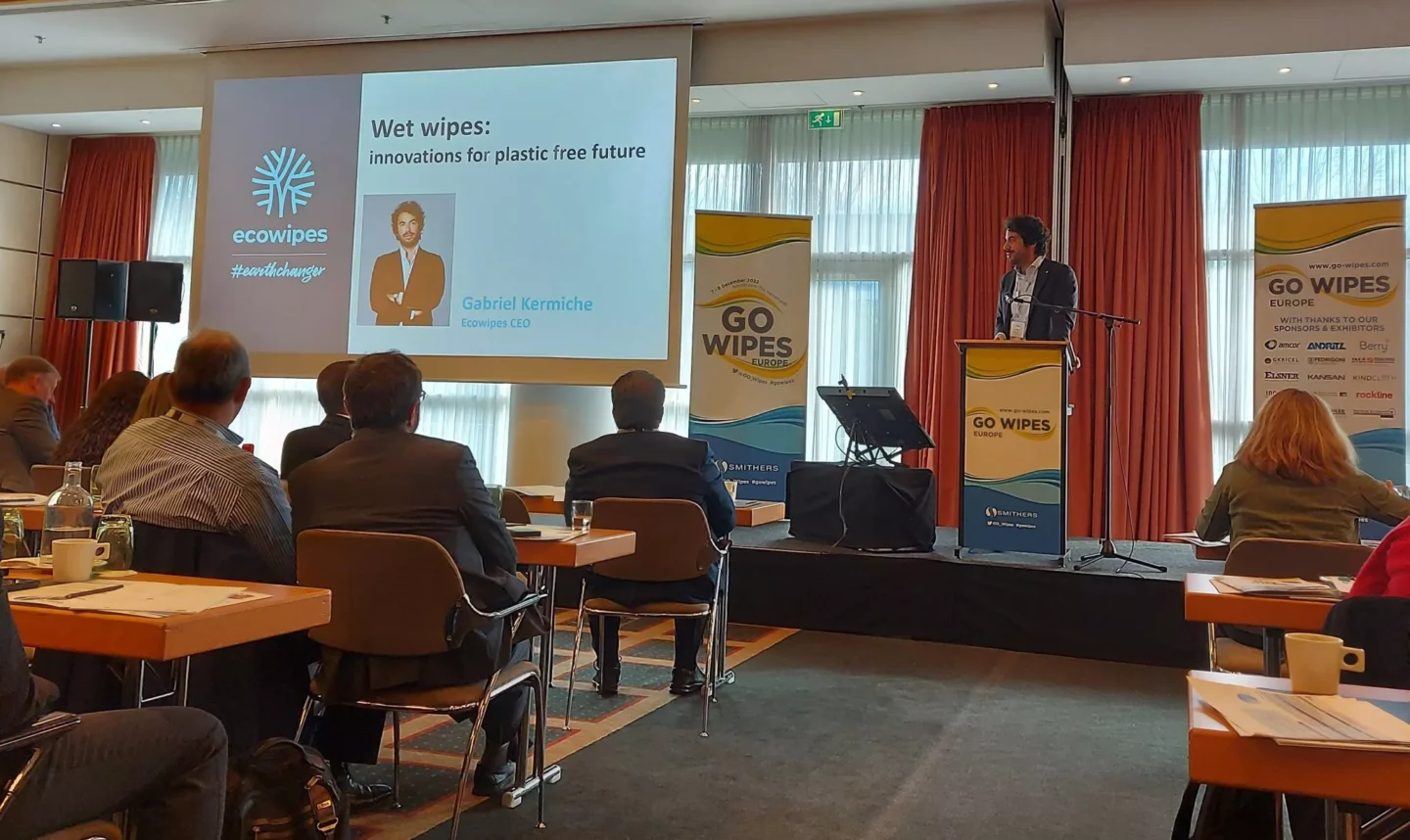
Go Wipes 2022 conference summary.

We invite you to a short summary of the Go Wipes 2022 conference, a European meeting of industry experts and producers, of which Ecowipes is a part.

The theme of this year’s conference is sustainable development and responsibility of producers, from nonwovens to finished products.

Ecowipes CEO Gabriel Kermiche believes that “It’s our responsibility to put the environment into concern”.

All participants of the meeting agree that there is no time for greenwashing, and it is necessary to act now and use the solutions that are already available on the market. Collaboration across sectors and real steps towards a sustainable future are important.

“We cannot wait for regulations to appear and make us to do things. We need to do something about the current situation and act now. We need to push retailers and suppliers to attain sustainability. We have personal responsibility to change for the future generations”, comments Ecowipes CEO Gabriel Kermiche.

Plastic-free wipes are becoming more and more visible on the market, although globally they are still a growing segment of wipes. At Ecowipes, we are constantly working to accelerate changes in the market. We can proudly say that we have already made a revolution on the shelves of Polish retail chains and most of the wipes available in our country are already biodegradable, which means plastic-free. Our next goal is to make a difference on store shelves across Europe. We are well on our way to do that.

In the nonwovens segment, there is definitely a growing interest in cellulose pulp. This is supported by environmental benefits and attractive price of this raw material. What the market is just discovering, we at Ecowipes already knew. The biodegradable Tricell nonwoven created by our R&D department, based on cellulose pulp, perfectly fits into the current trends and responds to the needs of the market, which is currently under high price pressure.

“In order to make the environment viable, we need to focus not only on biodegradability, but also on economy and affordable price for consumers of those products. With Tricell we have higher flexibility in price increases, challenging cost increase on the market”, argues Gabriel Kermiche.

Some countries and retail chains are already considering a complete ban on the sale of plastic-containing wipes, and others are already making specific decisions. For example, Tesco, Boots and Aldi have banned the sale of wipes containing plastic on their shelves in every their stores in UK, this ban applies not only to private label products, but also to well-known brands. This change is taking place slowly because there are still fears in the market that there are no alternatives to plastic products. “This is wrong”, believes our CEO Gabriel Kermiche. “We should be banning plastic-based wipes, as we banned plastic-based buds. Some say there are no widely available alternatives yet. I say – yes, there are!” He argued during his speech on Go Wipes.

Despite the current challenges faced by companies like energy prices, inflation and the Russian aggression against Ukraine, the research organization Smithers estimates that the market for wet wipes will continue to grow 6.9%.

Much attention was also paid to the topic improper disposal of used wipes is a serious economic and environmental problem. Many wipes are dumped down the drain, causing sewer networks to fail.  Experts participating in a debate organized during Go Wipes, Lara Wyss from the Responsible Flushing Alliance, Dr Anna Gergely – a specialist in international law and EU regulations, Peter Henley from the Water Research Center UK and our CEO Gabriel Kermiche, drew attention to the need for legible labelling of wipes packages and discussed the topic of flushability, whether positive (fine to flush) or negative (do not flush) messages are better. Together they came to the conclusion that both messages should be used in conjunction with each other, supported by in-depth education and strong responsibility of wipes producers.

“It is very important to differentiate baby wipes from toilet paper. All baby wipes should be considered non-flushable even if they could be flushed. It is a matter of global education and understanding that only paper (dry or wet) can be flushed”, argued Gabriel Kermiche.

Anna mentioned that we as an industry need to be proactive. We can not allow non-scientific voices to dictate how common people should understand the proper disposal of wipes. The European Commission is open to engage the industry in law creation. At the end of the day, the industry needs to solve the problem. Education and regulatory efforts are important. Proper labelling is a must.

Lara also stressed that we need to be consistent and proactive. We need to educate kids, activists, waterworks and legislative parties. We don?t need others to tell our stories. We need to be the storyteller. Speaking in one voice is crucial.

At the end Peter announced that soon a new “Bin the wipe” campaign will be launch to educate where used wipes should go.

Sustainability and carbon neutrality are the next challenges facing the industry. In order to achieve them, cooperation is needed between all chains within the supply chain (supplier – producer – brand owner). Everyone should be involved in sustainability goals and carbon neutrality. Reducing the carbon footprint can be achieved by reducing consumption, but also compensation programs, i.e. engaging in programs, e.g. forest protection, to compensate for the carbon footprint that cannot be avoided during production.

Responsibility for the environment should not fall only on the producers, but on the entire supply chain.

Customers are more and more willing to choose private labels over brands. [INTERVIEW]

“Customers are more and more willing to choose private labels over brands. This is due to the growing consumer awareness of good price-quality ratio big availability of private labels products, steming from growing market penetration by retail chains that sell them.? – says Gabriel Kermiche, CEO of Ecowipes in an interview Handelextra.pl

Ecological product must be affordable

?Do not waste, reuse? – this is our company?s motto.

  •  We have integrated production, which means that all products are made in one plant from start to finish.
  • One of the components of our wipes is waste cotton from the production of yarn. At our facory it gains a “second life” and is used in the production of nonwoven.
     
    More about the path of development of ecowipes ecological products and what elements are needed to effectively fight for our planet in the interview with Gabriel Kermiche for Dziennik Gazeta Prawna.

Eco does not have to be expensive [INTERVIEW] 

Eco does not have to be expensive – Marta Jabłońska-Kubow, Marketing Department Manager at ecowipes in an interview for OOH magazine! ?

Read and find out:

  • about biodegradable and plastic free products design and market introduction,
  • about change of mindset about ecological products being economical at the same time,
  • what caring technology is.

How does Tricell work?

? Zero plastic
? Lower carbon footprint
? Less waste
? Better environmental protection

Artur Gałwiaczek, our Head of Technology, speaks about the benefits that Tricell brings to the environment and consumers in the article by Rzeczpospolita.